
For every graduate across India dreaming of serving the nation through intelligence work, IB ACIO genuinely offers a career unlike almost anything else in government service — a Grade-II Executive officer role within India’s premier internal intelligence agency, carrying genuine national security responsibility alongside a respectable Level 7 pay scale bringing home roughly Rs. 80,000 to Rs. 90,000 monthly depending on your posting city. With over 3,700 vacancies announced in the most recent cycle, this recruitment genuinely represents one of the most significant opportunities in India’s central government intelligence apparatus. But here’s what makes this exam distinctly demanding to prepare for correctly: it combines a fast-paced, no-sectional-timing objective test with a genuinely different descriptive writing stage, and candidates who master Tier 1’s speed-focused format while neglecting Tier 2’s essay and precis writing skills often find themselves stumbling at exactly the stage meant to test their communication ability — a genuinely essential skill for future intelligence officers.
Let’s break down everything you need to know.
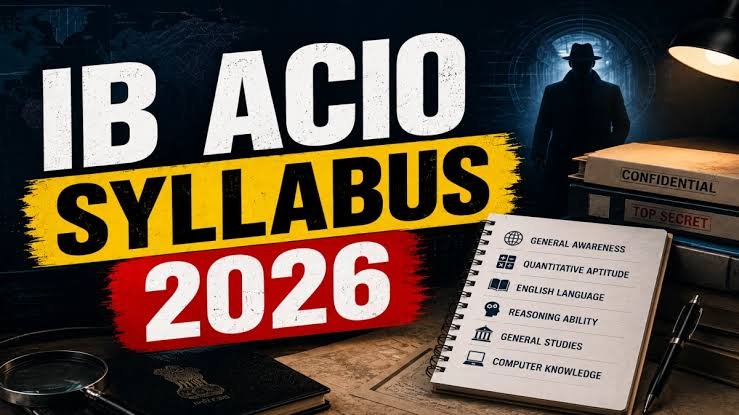
IB ACIO 2026: Quick Overview
| Particulars | Details |
| Conducting Body | Ministry of Home Affairs (MHA), for the Intelligence Bureau |
| Post | Assistant Central Intelligence Officer (ACIO), Grade-II/Executive |
| Total Vacancies (Recent Cycle) | 3,717 |
| Selection Stages | Tier 1 (Objective), Tier 2 (Descriptive), Tier 3 (Interview) |
| Tier 1 Questions | 100, worth 100 marks (1 mark each) |
| Tier 1 Duration | 60 minutes, no sectional timing |
| Tier 1 Negative Marking | 0.25 marks deducted per wrong answer |
| Tier 2 Marks | 50 |
| Tier 2 Duration | 60 minutes |
| Tier 2 Qualifying Score | Minimum 33% |
| Pay Scale (Level 7) | Rs. 44,900 to Rs. 1,42,400 |
| In-Hand Salary | Rs. 80,000 to Rs. 90,000 per month (varies by posting city) |
| Official Website | mha.gov.in |
Since Tier 1 gives you a single composite hour without any sectional time restrictions, candidates have genuine flexibility to allocate their time strategically across all five sections based on personal strengths, rather than being locked into fixed timing per subject.
Understanding the Three-Stage Selection Process
IB ACIO recruitment runs through a genuinely comprehensive process combining speed-based objective testing, descriptive writing evaluation, and a concluding interview.
The complete process includes:
- Tier 1 — an online, objective test screening candidates through five subject areas
- Tier 2 — an offline, descriptive paper testing essay writing and comprehension skills
- Tier 3 — the Interview, which may include a Psychometric or Aptitude Test as part of the evaluation
Since candidates need to qualify each stage sequentially, and Tier 2 specifically demands a genuinely different writing-based skill compared to Tier 1’s objective format, thorough preparation across both testing styles remains essential rather than assuming strength in one automatically translates to the other.
Tier 1 Exam Pattern
Tier 1 consists of 100 objective-type questions worth 100 marks, with each question carrying 1 mark, to be completed within a composite 60-minute duration. Genuinely importantly, there’s no sectional timing in this exam — candidates get the full hour to manage across all five sections however they choose, emphasising overall performance rather than imposing rigid constraints on individual subjects.
The five sections, each containing 20 questions, are:
- General Studies
- Current Affairs
- General Intelligence (Reasoning)
- Numerical Aptitude
- English Language
Negative marking applies at 0.25 marks deducted per wrong answer, so candidates need to approach uncertain questions with genuine caution, particularly given the fast pace this compressed 60-minute window across five subjects demands.
General Studies Syllabus
This section covers broad static knowledge expected of any competitive exam candidate, including history, geography, polity, and general awareness relevant to India’s governance and society.
Current Affairs Syllabus
This section covers recent national and international developments, rewarding candidates who maintain consistent, ongoing engagement with news throughout their preparation period rather than compressing this subject into last-minute revision.
General Intelligence (Reasoning) Syllabus
This section evaluates logical and analytical thinking through both verbal and non-verbal reasoning formats, covering analogies, series completion, coding-decoding, and pattern-based reasoning questions. Since this section rewards consistent practice more than memorisation, regular timed practice sessions genuinely build the speed and accuracy needed within the compressed exam duration.
Numerical Aptitude Syllabus
This section tests calculation speed and applied mathematical reasoning, covering foundational arithmetic, percentage, ratio, and time-based calculations relevant to a competitive exam of this standard.
English Language Syllabus
This section tests grammar, vocabulary, and comprehension skills, covering reading comprehension, error spotting, sentence correction, and vocabulary-based questions. Given that English also appears within Tier 2’s descriptive format, building strong foundational English skills here genuinely benefits your preparation across both stages.
Why the Absence of Sectional Timing Genuinely Changes Your Strategy
Since Tier 1 gives you a composite 60 minutes across all five sections without individual time restrictions, candidates can genuinely strategise their attempt order based on personal strengths — tackling their strongest, quickest sections first to build confidence and secure guaranteed marks before moving to comparatively more time-consuming areas. This flexibility genuinely differs from many other competitive exams that impose strict per-section timing, making it worth practising your own personal attempt sequence during mock tests well before your actual exam day.
Tier 2 Exam Pattern: Understanding the Descriptive Component
Candidates who clear Tier 1 move to Tier 2, a genuinely different offline, descriptive paper worth 50 marks, to be completed within 60 minutes. Candidates need a minimum of 33% to qualify this stage.
Tier 2 consists of:
- Essay Writing — with a choice of four given topics
- English Comprehension and Precis Writing
Since this stage tests structured written expression rather than simply selecting correct objective options, candidates who’ve only practised Tier 1-style objective questions throughout their preparation often find themselves genuinely underprepared for this considerable shift in format.
Why Essay Writing and Precis Skills Deserve Genuine, Dedicated Practice
Given that Tier 2 offers a choice of four essay topics, candidates benefit from building broad, well-rounded awareness across contemporary issues — governance, social themes, security, and current affairs — since this genuinely widens your ability to choose a topic you can write about confidently and coherently within the time limit. Alongside essay writing, precis writing demands the genuinely distinct skill of condensing longer passages into concise, accurate summaries without losing essential meaning.
Since these writing skills develop through consistent, structured practice rather than passive reading, candidates should incorporate regular essay and precis writing exercises into their preparation timeline well before reaching Tier 2, rather than treating this stage as a secondary concern to address only after clearing Tier 1.
Tier 3: Understanding the Interview and Potential Psychometric Assessment
Candidates who clear both Tier 1 and Tier 2 move to the Interview round, based on their combined merit performance across both written stages. A genuinely important detail worth noting is that candidates appearing for the interview may also be subject to a Psychometric or Aptitude Test, conducted as part of this concluding evaluation.
Given the sensitive, security-focused nature of intelligence work, this stage likely assesses personality traits, judgment, and overall suitability for a role demanding discretion and analytical thinking, alongside standard interview components like communication skills and awareness of current affairs relevant to internal security and governance.
Why Balanced Preparation Across All Stages Genuinely Matters
A recurring insight worth internalising is that candidates should focus on balancing their preparation across all subjects and tiers, rather than concentrating solely on one component. Given how genuinely different Tier 1’s objective, time-pressured format is from Tier 2’s descriptive writing demands, and how the concluding interview potentially adds a psychometric dimension, candidates need a genuinely comprehensive preparation approach spanning speed-based objective practice, structured writing skills, and interview readiness together.
Building an Effective Preparation Strategy
Given the three-stage structure spanning objective testing, descriptive writing, and a concluding interview, your preparation strategy needs to address all these components with proportional seriousness throughout your preparation timeline.
In your initial preparation phase, build strong, consistent competency across General Studies, Current Affairs, General Intelligence, Numerical Aptitude, and English Language, since clearing Tier 1 comfortably remains your first essential milestone. Given the absence of sectional timing, practice your own personal attempt sequence during mock tests, identifying which sections you can complete quickly and confidently to secure early marks.
Simultaneously, don’t neglect essay writing and precis practice simply because Tier 2 comes later in the process — building these structured writing skills takes sustained, dedicated practice over weeks, so incorporating regular writing exercises alongside your Tier 1 preparation ensures you’re genuinely ready for this format shift when the time comes.
Given the potential psychometric component within the interview stage, maintaining genuine, authentic self-awareness throughout your preparation — rather than attempting to construct artificial responses — likely serves you better than trying to anticipate specific psychometric test patterns.
FAQs
Q1. Since Tier 1 has no sectional timing, how should I decide which section to attempt first during the actual exam? Given the complete flexibility across all five sections within the composite 60-minute window, it’s gene
rally smart to attempt your strongest, quickest-to-solve sections first — often Reasoning or English for many candidates — to build early confidence and secure guaranteed marks before moving to sections requiring more careful, time-consuming problem-solving like Numerical Aptitude.
Q2. How important is Tier 2’s descriptive writing component compared to Tier 1’s objective testing, given they’re evaluated so differently?
Genuinely equally important — since candidates must qualify Tier 2 with a minimum 33% score to remain in contention regardless of their Tier 1 performance, neglecting essay writing and precis practice in favour of purely objective preparation risks disqualification at this stage despite a strong Tier 1 score.
Q3. Since Tier 2 offers a choice of four essay topics, how should I prepare to maximise my chances of finding a topic I can write confidently about?
Building broad awareness across contemporary governance, social issues, security matters, and current affairs — rather than narrowly focusing preparation on just one or two anticipated themes — genuinely increases your likelihood of encountering at least one topic among the four choices that you can address with genuine confidence and depth.
Q4. What should I expect from the Psychometric or Aptitude Test that may be part of the Interview stage?
Since this component likely assesses personality traits, judgment, and suitability for intelligence work rather than testing further academic knowledge, approaching this stage with authentic self-reflection and genuine responses, rather than attempting to construct artificial answers based on anticipated “correct” responses, tends to serve candidates better given the nature of what’s genuinely being evaluated.